
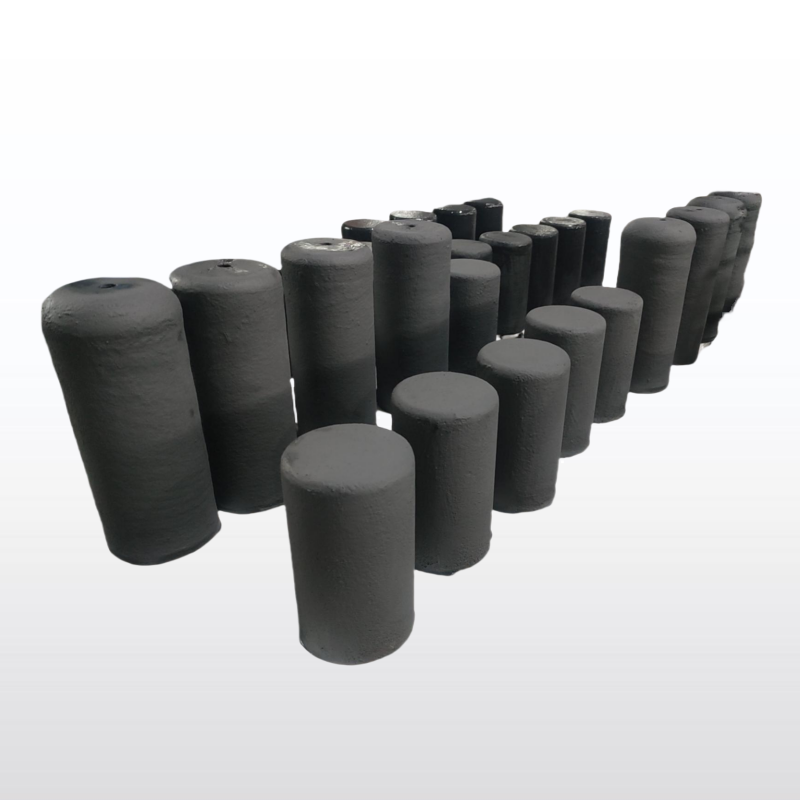
Clay Graphite Crucibles are high-performance containers used in metallurgy, foundries, and laboratories for melting and alloying metals. Their composition blends clay and graphite, achieving an ideal balance between heat resistance, insulation, and durability. These crucibles withstand temperatures up to 1600°C and are commonly used for metals like gold, silver, copper, aluminum, and various alloys. Their reliable performance supports efficient workflows and product purity in both industrial and artisanal settings.
Key Features of Clay Graphite Crucibles
The primary features of clay graphite crucibles are their high-temperature resistance and excellent thermal shock tolerance. Graphite in the mix ensures rapid and even heat distribution, while the clay provides structural strength and insulation. These crucibles are also chemically inert, making them resistant to corrosion by molten metals and fluxes—a crucial factor for maintaining melt quality and preventing contamination. Additionally, their non-wetting property simplifies pouring and cleaning, streamlining operation.
Availability in various sizes and custom shapes—like Clay Graphite Custom Crucibles—permits tailored solutions for diverse needs.
Benefits of Clay Graphite Crucibles
Choosing clay graphite crucibles offers a range of benefits, beginning with longevity and cost-effectiveness. Their resilience allows repeated use without frequent replacement, and their quick heating cuts energy consumption. These crucibles are versatile, compatible with a wide spectrum of metals and suitable for multiple furnace types, including induction and electric. Their affordability compared with alternatives, like silicon carbide crucibles, makes them attractive for various operations.
The materials used are largely recyclable and sustainable, supporting environmentally responsible practices.
Common Applications of Clay Graphite Crucibles
Clay graphite crucibles are used for smelting, refining, and casting in metallurgical plants and foundries, and for sample preparation in laboratories. Jewelry manufacturers employ them to melt precious metals without risking contamination, while the glass industry uses them in melting and recycling processes. Their resistance to high heat and corrosive chemicals extends to specialized areas such as advanced ceramics and battery component production.
Comparison: Clay Graphite Crucibles vs. Silicon Carbide Crucibles
| Characteristic | Clay Graphite Crucibles | Silicon Carbide Crucibles |
|---|---|---|
| Thermal Shock Resistance | Excellent | Good |
| Mechanical Strength | Good | Superior |
| Cost | More Affordable | Higher |
| Compatibility | Suited for non-ferrous metals, frequent pouring | Best for harsh conditions and repeated use |
| Chemical Resistance | Very Good | Excellent |
| Applications | Foundries, labs, jewelry, custom applications | Heavy industry, high-stress operations |
How to Choose the Right Clay Graphite Crucible
Selecting the proper crucible involves considering your operating temperature, batch size, metal type, and furnace compatibility. If you have unique requirements, custom crucibles can be manufactured to fit your process. Review supplier reputation and product specifications, and make sure the crucible’s chemical compatibility matches your melting materials. Proper selection prevents waste and ensures efficient production.
Maintenance and Best Practices
Optimize crucible life by gradually preheating before use, cleaning after each cycle, and storing in dry conditions. Inspect regularly for cracks or wear and replace when needed. Following these guidelines preserves quality, reduces downtime, and protects your investment.
Frequently Asked Questions About Clay Graphite Crucibles
Can clay graphite crucibles be used in a vacuum furnace?
Generally not recommended — graphite can react or degrade under certain vacuum conditions. Confirm with the supplier first.
What causes a crucible to fail prematurely?
Thermal shock from skipping preheating, moisture during storage, mechanical impact, and chemical attack from incompatible fluxes or metals.
Can the same crucible be used for different metals?
Yes, but thorough cleaning is needed to avoid cross-contamination. Dedicated crucibles per metal are preferred for high-purity work.
How does crucible shape affect melting performance?
Shape affects heat distribution, pouring control, and furnace fit. Match it to your workflow, not just the furnace.
Clay graphite crucibles combine durability, thermal efficiency, chemical resistance, and versatility, serving vital roles in metalworking, laboratories, and artisanal crafts. By focusing on the unique features and benefits, buyers can select the right crucible for their applications and keep processes productive and sustainable. Proper selection and maintenance extend the life and value of these crucibles, making them a smart solution for high-temperature melting and refining tasks.
Post time: Oct-27-2026