
In industrial processing, it is vital to guarantee the purity of the materials; hence introducing the degassing rotor. In this article, an attempt has been made to give an overview of the useful aspects of degassing rotors including their working mechanism and different application fields.
What Is a Degassing Rotor and How Does It Work?
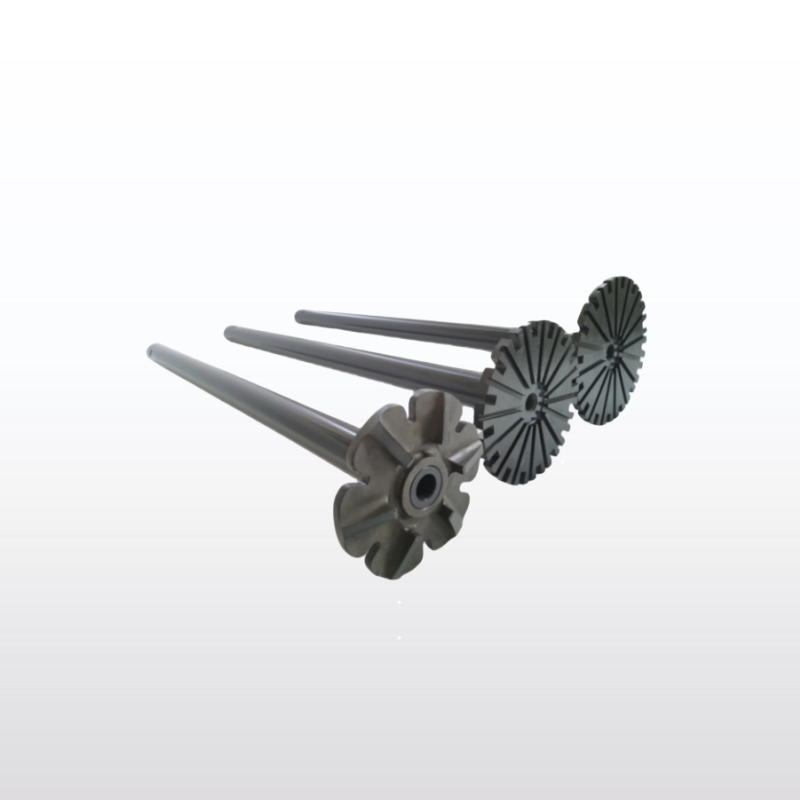
Degassing rotors are special components that are primarily intended to get rid of dissolved gases from materials, while also ensuring that the material meets the established quality standards. The rotor operates by applying either a vacuum in a vessel or lowering the pressure inside the chamber containing the liquid, which generates free gas. This step proves to be very important in fields like metallurgy, plastic production, or chemistry, where even a small amount of gas can cause defects in the finished product or reduce its quality.
Degassing refers to the process by which the rotor mixes the liquid and produces a vacuum, which reduces the pressure exerted on that liquid. The point of decreasing pressure means a reduction in the solubility of gases dissolved in the liquid. Therefore, gases start to escape through the process of agitation and change of pressure.
Key Components of a Degassing Rotor System
A standard degassing rotor system has several vital elements that contribute to its efficiency.
- Degassing Rotor Shaft: This is the core component that enables stirring and agitation.
- Vacuum Chamber: Where the liquid is held and gases are extracted.
- Sealing Mechanisms: To prevent outside air from entering the chamber.
- Control Systems: These will enable operators to set the vacuum levels and monitoring systems for optimum operation.
Benefits of Using a Degassing Rotor
Employing a degassing rotor in industrial processes comes with multiple advantages:
- Improved Product Quality: By eliminating undesirable gases, products meet higher quality standards.
- Enhanced Process Efficiency: The removal of gases can promote better mixing and processing of materials.
- Reduced Defects: The use of degassing technology reduces the possibility of defects such as porosity in metallurgical products.
Common Applications of Degassing Rotors
Degassing rotors are versatile and used in various industries, including:
- Metallurgy: Ensuring molten metals are free from gas inclusions.
- Plastics Manufacturing: Improving the quality of polymer melts.
- Chemical Processing: Removing air from reactive substances to prevent unwanted reactions.
Frequently Asked Questions
1. How do I know if I need a degassing rotor?
In case of your processes using the materials which are very sensitive to gas inclusions, you may require a degassing rotor.
2. What types of materials can degassing rotors handle?
They are suitable for a range of materials, including molten metals, resins, and viscous liquids.
3. Are there different kinds of degassing rotors?
Indeed, there are a variety of designs created for certain uses, which also include materials like graphite that are used in high-temperature scenarios.
Overall, degassing rotors are important in a lot of manufacturing processes and help to improve the quality of products by removing dissolved gases. It is important to understand how this tool plays such a wide range of roles in different industries in order to maximize its functionality during manufacturing.
Post time: Jul-23-2026