
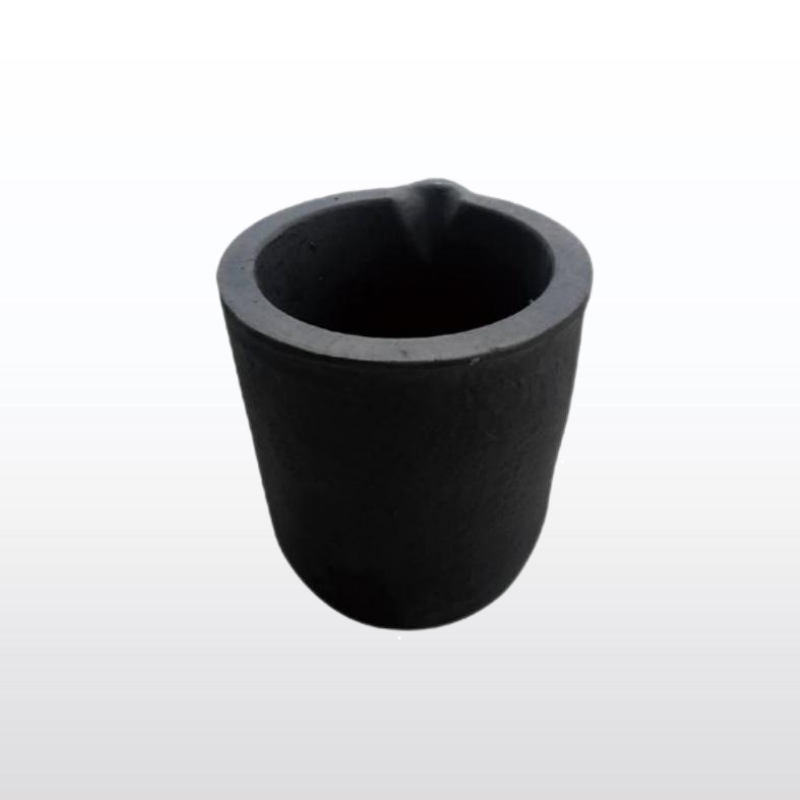
The Pure Graphite Crucible is a fundamental instrument in industrial practices, especially efficient in metalworking and materials processing. This tool is appreciated for its thermal resistance and chemical stability, which is due to its capacity to withstand extreme temperatures, therefore suitable for melting almost any material involving metals and even glass. The article provides detailed information about types of graphite crucibles, their common applications, and advantages.
What Is a Pure Graphite Crucible?
Pure graphite crucibles are vessels that are made almost entirely of graphite and are used for containing metals and other materials that may melt. Graphite is carbon in its crystal form, which offers some special properties that these crucibles utilize: it has a melting point that is high, a good thermal conductivity, and it is also very resistant to thermal shock. For this reason, graphite crucibles are especially useful for metals such as copper, gold, and aluminum.
Common Types of Graphite Crucibles
Graphite crucibles are available in multiple types which differ in shape, size, and applicability. Below you can see some of the most widely used types of crucibles, which include:
1. High Purity Graphite Crucible: With the presence of only little impurities this type is the option for processes that involve precise metallurgical characteristics.
2. Graphite Melting Crucible: These crucibles have been specifically engineered for melting applications that require elevated temperatures.
3. Large Capacity Graphite Crucibles: Designed for use on an industrial scale, these crucibles can process larger masses effectively, ensuring better performance.
Typical Applications and Uses
Pure Graphite Crucibles are commonly utilized across multiple fields due to their unique characteristics. Some common applications are:
1. Metal Casting: Crucibles are heavily used in metallurgy for the casting of metals such as aluminum, bronze, and gold. مThese are capable of holding liquid metal before being transferred to molds for creating desired shapes.
2. Laboratory Use: Graphite crucibles are employed in laboratories to conduct various tests on materials, as well as for sintering and melting processes.
3. Jewelry Making: Jewelry makers find it easy and accurate when using graphite crucibles to melt precious metals.
Key Benefits of Using Graphite Crucibles
The decision to use a Pure Graphite Crucible delivers several benefits:
1. High Thermal Conductivity: Crucibles that are made of graphite provide a reliable heating process which is important for proper melting and thereby leading to good quality.
2. Resistance to Thermal Shock: Their ability to endure quick changes in temperature means that they are not as prone to cracking or warping while in use.
3. Reusability: Depending on the type of melting material, the graphite crucibles can be reused for a number of times which saves costs.
4. Chemical Resistance: Due to graphite’s chemical resiliency, the material is able to withstand many melting processes without losing its structural integrity.
Conclusion
To sum up, while selecting a Pure Graphite Crucible has a considerable effect on a metal melting and casting process, the knowledge of the types, purposes, and advantages of these crucibles is important for stakeholders of such industries. Regardless of whether they need it for a production line or jewelry-making, investing in the perfect graphite crucible is crucial for successful operations. Those who want to channel more power into casting should also consider the possibilities presented by high-purity and specialized graphite.
Post time: Aug-11-2026