
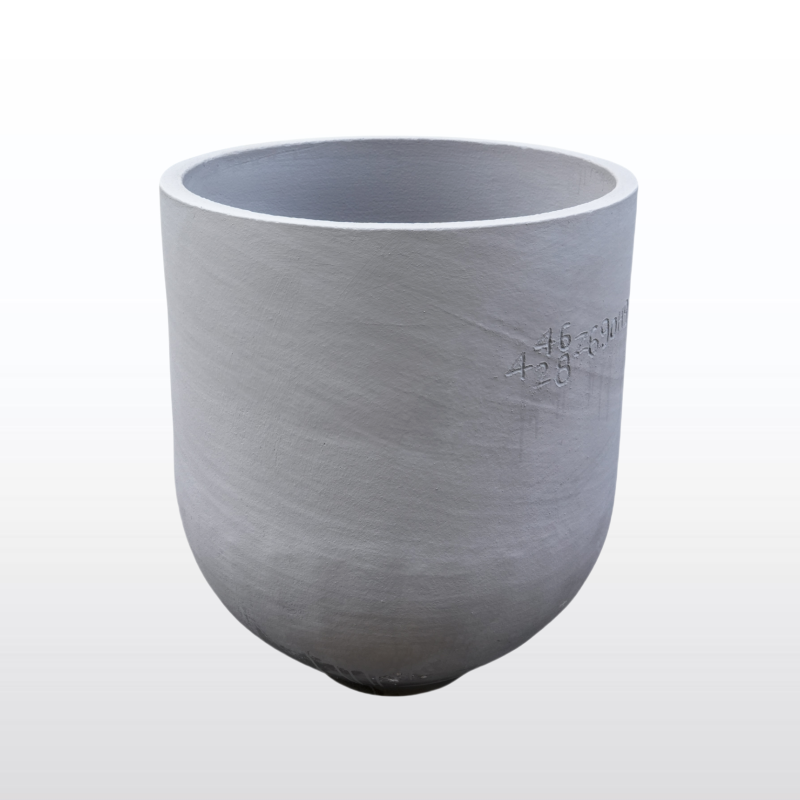
Choosing the right Copper Melting Crucible is essential for safe, efficient, and clean copper melting. The crucible must withstand temperatures above copper’s melting point of approximately 1,084.6°C (1,984.3°F), repeated heating and cooling, chemical reaction, and the weight of molten metal.
The best crucible depends on the metal, furnace type, batch size, operating temperature, and purity requirements. This guide explains the main crucible options and the basic setup needed for reliable copper melting.
Types of Copper Melting Crucibles
Clay Graphite Crucible
A clay graphite crucible is a popular choice for copper, brass, bronze, and other nonferrous metals. It offers good thermal conductivity, thermal shock resistance, and reasonable cost. It is suitable for many gas-fired and electric furnaces but must be kept dry and protected from overheating.
Silicon Carbide Crucible
A silicon carbide crucible provides excellent heat transfer, mechanical strength, and resistance to repeated heating cycles. It is often selected for production environments and demanding applications. However, oxidation, excessive heat, unsuitable flux, and rough handling can still reduce its service life.
Graphite Crucible
A graphite crucible heats quickly and is widely used for nonferrous metals. Its main weakness is oxidation when exposed to air at high temperatures. Graphite may also introduce carbon contamination, so it should be carefully evaluated for high-purity copper.
Ceramic Crucible
High-alumina and other ceramic crucibles can be useful when chemical purity is important. They resist many molten metals but are more sensitive to thermal shock and impact than graphite-based products.
Choosing the Right Crucible Material
Before buying a Copper Melting Crucible, confirm the following details with the supplier:
- Metal type: pure copper, brass, bronze, or copper scrap
- Furnace type: gas, electric, induction, or fuel-fired
- Maximum and continuous operating temperature
- Required batch weight and crucible dimensions
- Purity and contamination requirements
- Lifting tools and pouring method
For general-purpose copper melting, clay graphite and silicon carbide are often practical choices. Graphite is useful when fast heating is important, while ceramic may be better for applications requiring low contamination.
Crucible Capacity and Setup
Do not fill a crucible to the rim. Leave space for skimming, movement, and expansion. A practical working level is often about 60–75% of the usable internal volume, subject to the manufacturer’s instructions.
For example, pure copper weighs approximately 8.96 kg per liter. To melt 10 kg of copper while using 75% of the crucible volume:
10 ÷ 8.96 ÷ 0.75 = approximately 1.49 liters
Choose the next suitable size above this calculation. The furnace must be large enough for the crucible and provide safe clearance for lifting and pouring. Use a calibrated thermocouple or pyrometer to measure the actual metal temperature, not just the furnace temperature.
Basic Copper Melting Procedure
Inspect the crucible before every use. Do not use it if you find cracks, chips, swelling, severe wear, or damage to the base or pouring lip. Preheat it gradually according to the manufacturer’s instructions to remove moisture and reduce thermal shock.
Use clean, dry copper or alloy charge material. Remove oil, paint, moisture, sealed cavities, and unknown materials. Heat the charge steadily and remove dross with a suitable, preheated tool. Avoid excessive stirring because it can increase oxidation and gas absorption.
When the melt reaches the correct measured temperature, lift the crucible smoothly with compatible tongs or a lifting shank. Keep the pouring path clear and pour steadily into a completely dry and properly prepared mold.
Safety Tips for Copper Melting
Wear a full face shield over safety glasses, heat-resistant gloves, flame-resistant clothing, long trousers, and sturdy safety boots. Keep water, wet tools, damp scrap, and moisture away from molten copper. Water can instantly turn into steam and cause a violent explosion.
Provide effective ventilation for heat, fumes, and metal oxides. Work on a stable, noncombustible surface, keep emergency exits clear, and never work alone during pouring. Do not use water on a molten-metal spill; follow your workplace emergency procedure instead.
Maintenance and Frequently Asked Questions
Why do crucibles crack?
Common causes include moisture, rapid heating or cooling, impact, uneven support, and excessive temperature. Store crucibles in a dry location and allow them to cool naturally.
Is silicon carbide better than clay graphite?
Neither is best for every application. Silicon carbide usually offers strong durability and heat transfer, while clay graphite is versatile and economical. The correct choice depends on the furnace, alloy, production frequency, and purity requirements.
How long does a crucible last?
Service life depends on temperature, atmosphere, flux, charge cleanliness, handling, and the number of heating cycles. Keep an inspection log and replace the crucible before wear becomes a safety risk.
A reliable copper melting system requires the correct Copper Melting Crucible, a properly sized furnace, accurate temperature control, dry tools, and disciplined safety procedures. Matching the crucible material and capacity to your metal, furnace, and production needs will improve melting performance while reducing contamination, waste, and failure risk.
Post time: Aug-27-2026