
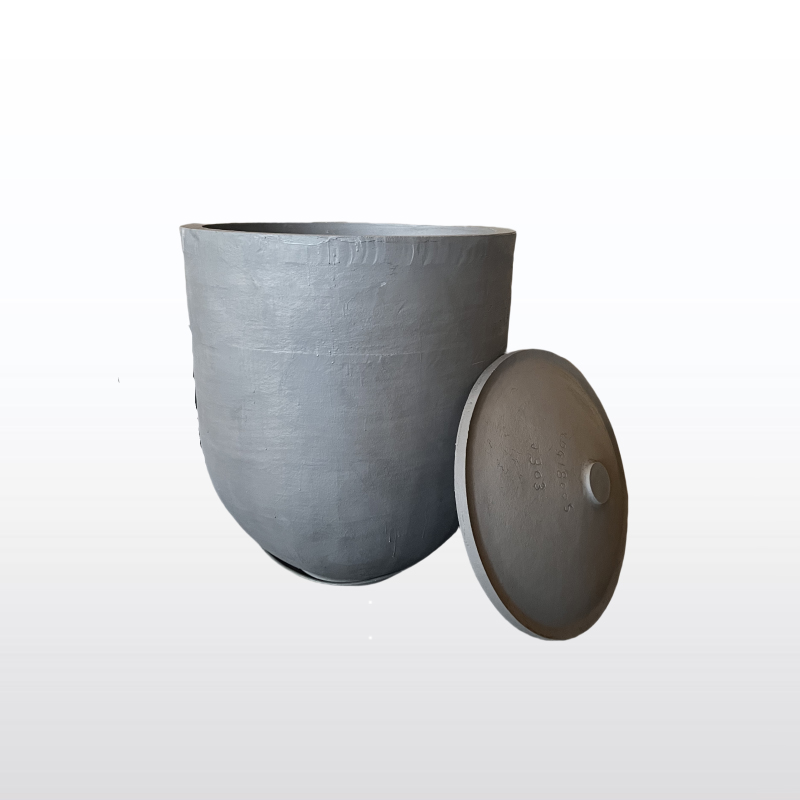
Crucible lids don’t just serve as a simple lid. They play an important role in melting metal, casting, and sintering, and maintaining proper crucible heating. The right crucible lid will minimize oxidation, limit contamination, conserve the heat and provide a better process control. Correct crucible lid selection can also prolong crucible life and minimize material wastage.
Why Use a Crucible Cover?
While heating or holding, a cover is placed over the crucible opening that does not necessarily need to be air-tight but rather provides a controlled condition for melting metals, powders, or other hot substances.
The main advantages are the decreased exposure to air and furnace debris, improved heat retention, absence of splashes, and more stable conditions of the melt. The lids are particularly advantageous for Aluminum, copper, brass, bronze, gold, silver, and other sensitive laboratory materials.
Common Types of Crucible Covers
Flat Covers
The typical and reasonable option is flat cover. It sits on the rim of the crucible and can be taken off easily using tongs. They are suitable for the ordinary cylindrical crucibles used in laboratories, jewellery studios, and foundries.
Recessed or Drop-In Covers
The covers partial fit the opening of the crucible, which makes them more secure. They are helpful when the crucibles need to be relocated regularly or when there is a need for better safety against dirt and debris coming from the furnace.
Domed and Vented Covers
Dome tops create a space inside for expanding materials or vaporizing substances. If you are heating wet materials, binders, fluxes, or other volatile materials, you should use vented covers that have holes to release gas. You should never completely seal a crucible that could create pressure.
Custom Covers
Tailor-made covers include pouring spouts, lifting holes, and thermocouple openings, as well as specific designs created for various industrial applications.
Crucible Cover Material Options Explained
Alumina Crucible Cover
Crucible lids made from alumina are extensively employed in laboratory heating processes, powder sintering operations, and high-purity practices. Alumina material possesses high-temperature resistance, electrical insulation properties, and stability in oxidizing or benign environments. However, alumina is highly brittle, meaning its heating and cooling process must be done gradually to prevent thermal shock.
Ceramic Crucible Cover
The materials that can be utilized to manufacture ceramic covers include alumina, cordierite, mullite and zirconia. The ceramic cover pieces can be utilized for varied high-temperature processes but the exact outcome achieved depends on the ceramic grades used, overall temperature of the operation, and exposure to chemicals.
Graphite Crucible Cover
The use of graphite coverings is common at the time of melting non-ferrous metals like gold, silver, copper, brass, bronze, and aluminum. Graphite has high thermal conductivity and thermal shock resistance. On the downside, graphite can undergo oxidation when in contact with air and hot temperatures; hence, it would be suitable for use in an inert, reducing atmosphere or in a carefully controlled atmosphere.
Silicon Carbide and Clay-Graphite Covers
Silicon carbide is known for its great thermal shock resistance and is mostly used in difficult foundry applications. Clay-graphite is a cheap choice for non-ferrous metal melting in situations where repeated use is required and it is mainly used in small and medium casting processes.
How to Choose the Right Crucible Cover
To minimize thermal stress caused by varying thermal expansion rates, choose the crucible lid from the same material as the crucible, if possible. Alumina lids are appropriate for alumina crucibles, while graphite or clay-graphite lids work well with graphite crucibles.
Next, verify the highest working temperature and the atmosphere of the furnace. A ceramic cover generally works well in air, while graphite suits inert or reducing environments better. Furthermore, keep the substance being treated in mind, since the cover can be adversely affected by certain slags, fluxes, and molten metals.
It is important to have precise measurements. Take notes of the size of the crucible opening, rim shape, inside diameter, and depth of seating. The top lid must fit perfectly without being too tight after heating. In case of vapors or gases forming, choose either a vent system design or ensure there is enough space.
Best Practices for Use
- Inspect covers for cracks, chips, warping, and slag buildup before use.
- Preheat ceramic covers gradually to prevent thermal shock.
- Keep the crucible rim and lid contact surfaces clean.
- Use suitable tongs and protective equipment when handling hot covers.
- Replace covers with deep cracks, severe erosion, or poor fit.
Frequently Asked Questions
Do I need a crucible cover for metal melting?
Even though a cover may not be necessary all the time it can help prevent oxidation, contamination, and heat loss leading to its frequent recommendation in melting processes.
Should a crucible cover have a vent hole?
For substances that emit vapors, gases, or moisture, it is important to use a venting-capable top. In terms of dry metal melting, a well-fitting lid could be used. However, the crucible should never act as a sealed pressure vessel.
When should I replace a crucible cover?
Do so when fissures develop, fragments drop into the furnace, the lid deforms, or it does not fit tightly on the flask anymore.
Using the appropriate crucible lid enhances the quality of melting, heat efficiency, and safety of operations. By choosing the proper material, snug fit, and suitable design of your desired temperature and atmosphere in the furnace, you can protect your crucible and obtain consistent results.
Post time: Sep-03-2026