
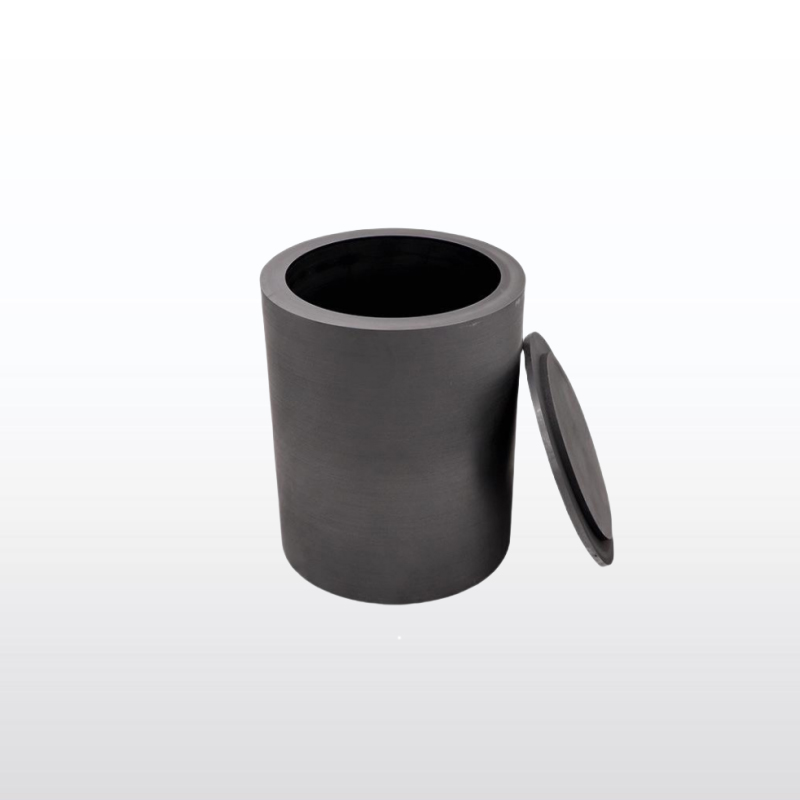
For metalworking and metallurgy, graphite crucibles are one of your most important resources. Due to their excellent thermal conductivity and durability, graphite crucibles are a preferred option when melting metals or working at high temperature. Properly preparing your graphite crucible before use increases its performance, extends its lifetime, and will prevent metal contamination. This guide explains how to properly prepare your graphite crucible. Regardless of which type of graphite crucible is being used—be it a large, new graphite crucible or a small graphite clay crucible—following these recommendations will help you make the most of your renewable purchase.
1. Cleaning Your Graphite Crucible
One of the first tasks involved in making your wallet is to clean it. This means any brand new crucibles that you haven’t used yet, but also existing ones that have been used before. To remove any residual ashes, impurities, or debris, a soft brush or cloth should be used. Avoid using harsh chemicals, as they may damage the structure of the crucible when in contact with it.
2. Seasoning the Crucible
Many users often ask whether or not they should season a graphite crucible. If you’ve purchased a new crucible/experienced an extended period of use, then you will want to season the crucible (new and old) in order to ensure proper usage because seasoning helps build an insulating coating/layer that provides a longer life for the crucible. In order to season your crucible, you will need:
- A heat source (like a furnace or kiln)
- Oil (vegetable or mineral)
- A heat-resistant brush
Apply a thin coat of oil with the paintbrush to the inside wall of the crucible. Heat the crucible slowly so that the oil can begin to smoke (this occurs around 180 /C or 356 /F). Increase the temperature of the crucible slowly to 1,000 /C (1,832 /F) and hold this temperature for one hour. This will coat the inside walls of the crucible with a carbonized coating from the oil and will increase the crucible’s resistance to oxidation and contamination during the melting of metal.
3. Understanding Graphite Crucible Construction
You might be interested to see how graphite crucibles are produced. The production of graphite crucibles involves many different processes that require both natural and man-made constituents such as clay and/or resins as their bonding constituents (the word “bonding” is commonly used to describe the materials used to hold two things together). These bonding constituents are placed together into a mixture, which is produced into a specific form and subsequently subjected to a drying process and then heated at high temperatures to improve the strength and thermal ability of the crucible. When using good manufacturing practices, the crucibles produced will have the ability to withstand very high temperatures when working with various types of metals.
4. Using Borax with Your Graphite Crucible
It is common for someone to ask if they need to use Borax when using a Graphite Crucible. Borax will act as a flux and will help eliminate oxidation and contamination from the molten metal so you can make a purer product; however, Borax is not mandatory for your use of a crucible. If you decide to use Borax, you would put a pinch on the bottom of your crucible before adding your metal to be melted, depending on what metal will be used, you may not need to use Borax.
Final Tips for Using a Graphite Crucible
Use your graphite crucible as directed but, before doing so, use common sense and basic safety precautions when preparing your crucibles. Follow these three tips: Preheat your crucibles gradually to prevent any rapid changes in temperature that could lead to thermal shock. (If possible, do this slowly.) When monitoring your melting, be careful not to overheat the crucible and keep an eye on how quickly the metal turns into liquid.
Due to their thermal efficiency and resistance to wear and tear, graphite crucibles are very useful in many different industries’ processes. To help improve performance and life expectancy, you should properly prepare your crucible by following these steps: Clean, Season, and Use Borax (if needed). If you are using a new large graphite crucible or reusing an old one, following these best practices will give you the best chance for success with your metalworking project!
To properly prepare a graphite crucible for melting metals effectively requires two elements cleaning and seasoning, as well as understanding how they are made with additional materials (i.e., borax). Once those three areas are addressed, you will then have successfully prepared a graphite crucible and will be able to perform your metal melting confidently!
Post time: Jun-09-2026